Sunday, June 28, 2009

Imperial Yang Style Taiji History


A quick note about The Imperial Yang Style Taijiquan:

Often when you read about this style, you will be told something like:

"Yang Luchan was pressured into teaching his style to the imperial family, and so he chose to teach them an inferior version of the art."

This is another example of how official histories of martial arts are generally just propaganda. It's cut from the same cloth as the silly story of "how Yang Luchan learned Chen Style through a hole in the fence." (I'll write a series of posts about history and propaganda soon.)

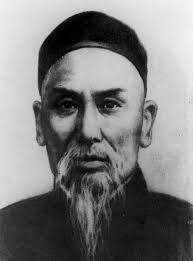
Yang Luchan, by all useful accounts, was thrilled to teach in the imperial household, because it meant good money. He taught them the more comprehensive earlier system with many different forms.

What most people learn now is the "Public" system, which has only one central form. (This isn't necessarily bad: The Public form is a beautiful concentration of the essence of the rest of the system, a sort of "short form" of the whole system.)

Imperial Yang Style Taiji

I've been getting a lot of questions about the Funei ("Imperial") Yang version of Yang style Taijiquan.

This is what I know.

I've reviewed a series of four videos, in Mandarin, on this style.

I'm very excited about Imperial Yang Style, because it has the same forms as the Indoor Yang Style, and so it's the first solid proof that I didn't just make the whole thing up.

According to these videos, which you can buy here (I have no financial connection to this website, but they're great people and one of the best sources for Chinese martial arts information), the Imperial Yang Style has exactly the same set of forms as the Indoor Yang Style that I learned.

The sequence of movements seems to be almost identical in the three forms on these videos.

The presentation is a little different: The frame is a little more conservative, which isn't necessarily bad.

There is also a lot more White Crane in the movements, such as Crane Hook Hands in unusual places. Taiji, like most Daoist styles, has a heavy dose of White Crane as its foundation, so this isn't surprising. (I've mentioned before that White Crane is the "lost mother style.")

The hand movements in general are more expressive, like many Daoist styles. The teacher's hands seem tight rather than loose, which would be bad, but I may simply not understand what I'm seeing. (The most important mantra for a martial arts seeker is "I don't know everything." Repeat 500 times per day for successful results.)

Here's a demo of this version of the Wisdom Fist/Clever Hammers form:


I'm posting video clips of the demonstrations of these forms on youtube here.

Saturday, June 27, 2009

How to be a Hermit... In a City.

A lot of the traditional Daoist texts talk about retreating to mountain caves and so forth, in order to escape from the social constructs that limit your cultivation.

Most of us don't have this option. What do we do?

Actually, if you read the less popular (and, in my opinion, more useful) texts, you will find quotes such as:

"If you retreat to a mountain cave, you will become known as a famous hermit, and soon your cave will be surrounded by prospective students and hangers-on. If you retreat to a large city, however, you will become invisible."

That's it. You can be a hermit anywhere, but it's easier to do so in a big city where no one knows you, than in suburbia.

Same Form, Different Day

One of the challenges of teaching the Daoist martial arts is that your students necessarily go through a phase of structure rather than expression, and you have to join them there. Let me explain.

In order to learn a form, for example, you must first learn the form exactly. "Put your foot exactly here, and your arm exactly here," and so forth. The problem is, the Daoist martial arts are about personal exploration and expression. At some point, you have to let go of the mechanics and explore the intent. From this point on, your form will never be exactly the same each time you perform it.

As a teacher, I'm constantly forced to do the form mechanically so as not to confuse my students. Occasionally, I will have a student who "gets it" and I can explore the form with them. With my other students, I have to constantly repeat the form exactly, or they will become confused.

One of the best things a teacher can develop is "senior students." They can teach the basics for you, and you can show up later to develop the more interesting stuff.

The Four Hooks of Taijiquan

The White Crane Hook Hand is one of the most misunderstood hand gestures in Yang Family Taiji. Perhaps because it only appears in the Public Form in Single Whip. I'm going to skip over its striking applications today and just discuss its hooking applications.

There are a lot of different versions of this posture: Some people hold the arm completely straight, and some bend the elbow. Some hold the Hook Hand way above their head and the Wing Hand low, and some hold them both at shoulder level. In the medium and small forms, it is essential that there be a distinct bend in the armpit and the elbow joints. This is why:

The purpose of this hand in Single Whip is to hook -- not to hit, as some people would like you to think. It is there to hold something in place while you do the rest of the movement. There are four ways it can do this:

1) Grab
Simply, grasping with the fingers.

2) Wrist Hook
Using the wrist to hook over whatever you are controlling, as in Praying Mantis. The reason it looks different from a Mantis hook at all is because it also includes #1.

3) Elbow Hook
Holding it in the crook of your elbow and pressing your forearm and upper arm around it.

4) Armpit Hook
Holding it in your armpit and pressing your forearm down on it.

It's important to note that while the last two might seem inelegant, they are much more likely in a real fight. In a real fight, as soon as the adrenaline starts pumping through your veins, all your fine motor skills depart in favor of more powerful gross motor skills, so you can forget about using your fingers. (Also, you may have blood or sweat on your fingers, or you may actually have had your fingers cut off. It's called a fight for a reason.)

Now you can see why the bends in the armpit and elbow are necessary.

The Syllabus of the Indoor Yang Style, Part 1

I get a lot of requests from seekers about the teaching structure of the Indoor Yang Family Taiji system. Here it is for all you seekers out there.

Note that this is a list of the forms only. Push Hands, which is really the center of the system, is not listed here. It has a separate syllabus.


1. The Large Frame Form, 大架拳 (Dà Jià Quán)
2. The Old/Medium Frame Form, 老架拳 (Lăo Jià Quán)
3. The Small Frame Form 小架拳 (Xiăo Jià Quán)
4. The "Long" Form, 太极长拳 (Tàijí Cháng Quán)

The above are always taught in this order. The next forms are taught in between the above main forms. They don't absolutely have to be taught in a particular order, but they build on skills from the different versions of the main form and so are more appropriate in the following order:

5. The Post-Heaven Methods, 后天法 (Hòu Tiān Fă)
6. The Little Nine Heavens Form, 小九天 (Xiăo Jiŭ Tiān)
7. The Wise Hammers/Wisdom Fist 智捶 (Zhì Chuí)
8. The Pressure Point Striking ("Dim Mak") Form


Other forms that may be taught include;

* The Taiji Ball Movements
* The Straight Sword
* The Sabre
* The Spear
* The Staff
* The Thirteen Cinnabar Gongfa Movements

and a few other, less well known weapons such as the walking stick and knife.

Friday, June 26, 2009

The Three Frames of Indoor Yang Family Fist

I've had a lot of requests to explain the reason for the three different frames in the Indoor Yang Family Style. Simply:

The Big Frame teaches basic body mechanics, conditions the body, and trains the instinctive patterns somewhat.

The Old Frame / Medium Frame teaches skill and superior body mechanics in a more combative Santi stance.

The Small Frame is almost entirely done in the manner you would use the applications to fight. You have to look closely to see the body mechanics in play, since they are so small. The Wu style is essentially this form slowed down.

These forms are the backbone of the system, and are supported by the "Long" Frame, the "Wisdom Fist", and the other forms in the system.