
I get this question a lot, and not just in Taijiquan. "Why is my form lopsided? Some movements are only done on one side."
Answer 1 (Glib):
It isn't lopsided.
Answer 2 (Useful):
A form isn't necessarily a drill. In a drill, you perform your moves on both sides. A form is designed to hold the information necessary to reconstruct a system.
A lot of systems have forms that are also drills, in that each move is performed on both sides, but this is not a necessary feature of a form.
You are supposed to take each movement from the form and practice it independently, generally on both sides.
Answer 3:
The reason lot of movements in, for example, the Yang form are practiced only on one side is that the Yang family system defaults to a left lead. You are constantly trying to return to your fighting stance. Therefore, you are less likely to perform Single Whip on the other side.
This doesn't mean that you shouldn't practice it on both sides.
Showing posts with label Taijiquan. Show all posts
Showing posts with label Taijiquan. Show all posts
Wednesday, October 14, 2009

Tuesday, September 15, 2009
The Five Hammers of Yang Taijiquan, Part 1
The Five Hammers are an important part of Yang Family Taijiquan that are often overlooked. Every time you see a fist in the public form, you are seeing an opportunity for one of these techniques. This is the first in a series of articles outlining the Five Hammers.
The Five Hammers are:
1. 正捶
Zhèng Chuí
Straight Hammer
2. 横捶
Héng Chuí
Horizontal Hammer
3. 栽捶
Zāi Chuí
Plant Hammer (“Plant Punch”)
4. 降捶
Jiàng Chuí
Dropping Hammer
5. 提捶
Tí Chuí
Lifting Hammer
There is a whole form devoted to learning these techniques, called the Wise Hammers form. I'm releasing a book on this form in a few days, available from Lulu.com and my website, and there is also a VCD of the Imperial Yang version of this form. Plum Publications sells it under the title "Wisdom Fist." (I have no financial connection to Plum Publications, but I love what they offer. Google them.)
It’s important to understand that while on the surface these seem to be simple punches done at different angles, they are actually much more than this.
The word “Chuí” is a word commonly translated as “punch.” However, it includes a number of techniques that we wouldn’t consider to be punches, such as hammer fists. It also doesn’t include a number of techniques that we would consider punches, such as jabs. What’s the difference? This word means “to hammer,” or “to pound into.” A “Chuí” technique is one that uses striking mechanics, but hits with enough force to move whatever it hits. Jabs, for example, work by trauma to the nervous system: They aren’t designed to physically move the opponent.
So the purpose of a “Chuí” technique is to use the mechanics of striking to move something. That’s a deeper understanding, but there’s more. While each of these techniques is shown with a fist, they don’t have to be a punch. A lot of them are much more likely to be done with the elbow or the palm in a real fight.
On an even deeper level, they don’t even have to strike anything. This will be explained further on in the series.
The next installment will outline the Straight Hammer.
The Five Hammers are:
1. 正捶
Zhèng Chuí
Straight Hammer
2. 横捶
Héng Chuí
Horizontal Hammer
3. 栽捶
Zāi Chuí
Plant Hammer (“Plant Punch”)
4. 降捶
Jiàng Chuí
Dropping Hammer
5. 提捶
Tí Chuí
Lifting Hammer
There is a whole form devoted to learning these techniques, called the Wise Hammers form. I'm releasing a book on this form in a few days, available from Lulu.com and my website, and there is also a VCD of the Imperial Yang version of this form. Plum Publications sells it under the title "Wisdom Fist." (I have no financial connection to Plum Publications, but I love what they offer. Google them.)
It’s important to understand that while on the surface these seem to be simple punches done at different angles, they are actually much more than this.
The word “Chuí” is a word commonly translated as “punch.” However, it includes a number of techniques that we wouldn’t consider to be punches, such as hammer fists. It also doesn’t include a number of techniques that we would consider punches, such as jabs. What’s the difference? This word means “to hammer,” or “to pound into.” A “Chuí” technique is one that uses striking mechanics, but hits with enough force to move whatever it hits. Jabs, for example, work by trauma to the nervous system: They aren’t designed to physically move the opponent.
So the purpose of a “Chuí” technique is to use the mechanics of striking to move something. That’s a deeper understanding, but there’s more. While each of these techniques is shown with a fist, they don’t have to be a punch. A lot of them are much more likely to be done with the elbow or the palm in a real fight.
On an even deeper level, they don’t even have to strike anything. This will be explained further on in the series.
The next installment will outline the Straight Hammer.
Sunday, June 28, 2009
Imperial Yang Style Taiji History
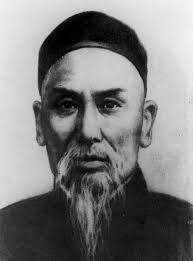
A quick note about The Imperial Yang Style Taijiquan:
Often when you read about this style, you will be told something like:
"Yang Luchan was pressured into teaching his style to the imperial family, and so he chose to teach them an inferior version of the art."
This is another example of how official histories of martial arts are generally just propaganda. It's cut from the same cloth as the silly story of "how Yang Luchan learned Chen Style through a hole in the fence." (I'll write a series of posts about history and propaganda soon.)
Yang Luchan, by all useful accounts, was thrilled to teach in the imperial household, because it meant good money. He taught them the more comprehensive earlier system with many different forms.
What most people learn now is the "Public" system, which has only one central form. (This isn't necessarily bad: The Public form is a beautiful concentration of the essence of the rest of the system, a sort of "short form" of the whole system.)
Imperial Yang Style Taiji
I've been getting a lot of questions about the Funei ("Imperial") Yang version of Yang style Taijiquan.
This is what I know.
I've reviewed a series of four videos, in Mandarin, on this style.
I'm very excited about Imperial Yang Style, because it has the same forms as the Indoor Yang Style, and so it's the first solid proof that I didn't just make the whole thing up.
According to these videos, which you can buy here (I have no financial connection to this website, but they're great people and one of the best sources for Chinese martial arts information), the Imperial Yang Style has exactly the same set of forms as the Indoor Yang Style that I learned.
The sequence of movements seems to be almost identical in the three forms on these videos.
The presentation is a little different: The frame is a little more conservative, which isn't necessarily bad.
There is also a lot more White Crane in the movements, such as Crane Hook Hands in unusual places. Taiji, like most Daoist styles, has a heavy dose of White Crane as its foundation, so this isn't surprising. (I've mentioned before that White Crane is the "lost mother style.")
The hand movements in general are more expressive, like many Daoist styles. The teacher's hands seem tight rather than loose, which would be bad, but I may simply not understand what I'm seeing. (The most important mantra for a martial arts seeker is "I don't know everything." Repeat 500 times per day for successful results.)
Here's a demo of this version of the Wisdom Fist/Clever Hammers form:
I'm posting video clips of the demonstrations of these forms on youtube here.
This is what I know.
I've reviewed a series of four videos, in Mandarin, on this style.
I'm very excited about Imperial Yang Style, because it has the same forms as the Indoor Yang Style, and so it's the first solid proof that I didn't just make the whole thing up.
According to these videos, which you can buy here (I have no financial connection to this website, but they're great people and one of the best sources for Chinese martial arts information), the Imperial Yang Style has exactly the same set of forms as the Indoor Yang Style that I learned.
The sequence of movements seems to be almost identical in the three forms on these videos.
The presentation is a little different: The frame is a little more conservative, which isn't necessarily bad.
There is also a lot more White Crane in the movements, such as Crane Hook Hands in unusual places. Taiji, like most Daoist styles, has a heavy dose of White Crane as its foundation, so this isn't surprising. (I've mentioned before that White Crane is the "lost mother style.")
The hand movements in general are more expressive, like many Daoist styles. The teacher's hands seem tight rather than loose, which would be bad, but I may simply not understand what I'm seeing. (The most important mantra for a martial arts seeker is "I don't know everything." Repeat 500 times per day for successful results.)
Here's a demo of this version of the Wisdom Fist/Clever Hammers form:
I'm posting video clips of the demonstrations of these forms on youtube here.
Saturday, June 27, 2009
The Syllabus of the Indoor Yang Style, Part 1
I get a lot of requests from seekers about the teaching structure of the Indoor Yang Family Taiji system. Here it is for all you seekers out there.
Note that this is a list of the forms only. Push Hands, which is really the center of the system, is not listed here. It has a separate syllabus.
1. The Large Frame Form, 大架拳 (Dà Jià Quán)
2. The Old/Medium Frame Form, 老架拳 (Lăo Jià Quán)
3. The Small Frame Form 小架拳 (Xiăo Jià Quán)
4. The "Long" Form, 太极长拳 (Tàijí Cháng Quán)
The above are always taught in this order. The next forms are taught in between the above main forms. They don't absolutely have to be taught in a particular order, but they build on skills from the different versions of the main form and so are more appropriate in the following order:
5. The Post-Heaven Methods, 后天法 (Hòu Tiān Fă)
6. The Little Nine Heavens Form, 小九天 (Xiăo Jiŭ Tiān)
7. The Wise Hammers/Wisdom Fist 智捶 (Zhì Chuí)
8. The Pressure Point Striking ("Dim Mak") Form
Other forms that may be taught include;
* The Taiji Ball Movements
* The Straight Sword
* The Sabre
* The Spear
* The Staff
* The Thirteen Cinnabar Gongfa Movements
and a few other, less well known weapons such as the walking stick and knife.
Note that this is a list of the forms only. Push Hands, which is really the center of the system, is not listed here. It has a separate syllabus.
1. The Large Frame Form, 大架拳 (Dà Jià Quán)
2. The Old/Medium Frame Form, 老架拳 (Lăo Jià Quán)
3. The Small Frame Form 小架拳 (Xiăo Jià Quán)
4. The "Long" Form, 太极长拳 (Tàijí Cháng Quán)
The above are always taught in this order. The next forms are taught in between the above main forms. They don't absolutely have to be taught in a particular order, but they build on skills from the different versions of the main form and so are more appropriate in the following order:
5. The Post-Heaven Methods, 后天法 (Hòu Tiān Fă)
6. The Little Nine Heavens Form, 小九天 (Xiăo Jiŭ Tiān)
7. The Wise Hammers/Wisdom Fist 智捶 (Zhì Chuí)
8. The Pressure Point Striking ("Dim Mak") Form
Other forms that may be taught include;
* The Taiji Ball Movements
* The Straight Sword
* The Sabre
* The Spear
* The Staff
* The Thirteen Cinnabar Gongfa Movements
and a few other, less well known weapons such as the walking stick and knife.
Friday, June 26, 2009
The Three Frames of Indoor Yang Family Fist
I've had a lot of requests to explain the reason for the three different frames in the Indoor Yang Family Style. Simply:
The Big Frame teaches basic body mechanics, conditions the body, and trains the instinctive patterns somewhat.
The Old Frame / Medium Frame teaches skill and superior body mechanics in a more combative Santi stance.
The Small Frame is almost entirely done in the manner you would use the applications to fight. You have to look closely to see the body mechanics in play, since they are so small. The Wu style is essentially this form slowed down.
These forms are the backbone of the system, and are supported by the "Long" Frame, the "Wisdom Fist", and the other forms in the system.
The Big Frame teaches basic body mechanics, conditions the body, and trains the instinctive patterns somewhat.
The Old Frame / Medium Frame teaches skill and superior body mechanics in a more combative Santi stance.
The Small Frame is almost entirely done in the manner you would use the applications to fight. You have to look closely to see the body mechanics in play, since they are so small. The Wu style is essentially this form slowed down.
These forms are the backbone of the system, and are supported by the "Long" Frame, the "Wisdom Fist", and the other forms in the system.
Monday, June 22, 2009
Push Hands: The Brute, Part 2: The Sudden Jerk
One of the most common techniques The Brute will use is a sudden backward jerking pull. The Brute's technique isn't skillful or elegant, but it will often work simply because their practitioner is playing Push Hands, not Jerk Hands.
Here are some traditional responses to this technique that you can practice. I don't think any of these will be appropriate in a push hands tournament, but they are all correct applications.
All of these techniques start with the obvious: Yield. Take a step in the direction your opponent is pulling you. Do this on your own terms, rather than stumbling.
For the sake of description, I'm assuming your opponent has grabbed your right wrist with his right hand and yanked you somewhere to his right. (I'm assuming your opponent is male just for writing convenience, not sexism.)
PICTURES WILL BE ADDED LATER.
Response 1: The Elbow / The Shoulder
If your opponent pulls you toward his body rather than to one side, take a step toward him (yield) and apply your elbow to their centerline. If necessary, you may turn your body and use your shoulder.
Response 2: The V-Arm Lock
As soon as your opponent grabs your wrist, put your left hand on top of his, trapping it. When he pulls, take a step forward and roll your right hand in a clockwise direction and point it downward. (This is in Needle at Sea Bottom.)
Response 3: The Arm Drag
As soon as your opponent grabs your wrist, put your left hand on top of his, trapping it. When he pulls, take a step (or two) past your opponent and drop your weight, essentially punching your right hand towards the floor. (This is in Step Up, Plant Fist.)
WARNING: Make sure your right knee isn't forward. If it is, your opponent's elbow/shoulder/spine may break across your knee. (This is the actual original application.)
Here are some traditional responses to this technique that you can practice. I don't think any of these will be appropriate in a push hands tournament, but they are all correct applications.
All of these techniques start with the obvious: Yield. Take a step in the direction your opponent is pulling you. Do this on your own terms, rather than stumbling.
For the sake of description, I'm assuming your opponent has grabbed your right wrist with his right hand and yanked you somewhere to his right. (I'm assuming your opponent is male just for writing convenience, not sexism.)
PICTURES WILL BE ADDED LATER.
Response 1: The Elbow / The Shoulder
If your opponent pulls you toward his body rather than to one side, take a step toward him (yield) and apply your elbow to their centerline. If necessary, you may turn your body and use your shoulder.
Response 2: The V-Arm Lock
As soon as your opponent grabs your wrist, put your left hand on top of his, trapping it. When he pulls, take a step forward and roll your right hand in a clockwise direction and point it downward. (This is in Needle at Sea Bottom.)
Response 3: The Arm Drag
As soon as your opponent grabs your wrist, put your left hand on top of his, trapping it. When he pulls, take a step (or two) past your opponent and drop your weight, essentially punching your right hand towards the floor. (This is in Step Up, Plant Fist.)
WARNING: Make sure your right knee isn't forward. If it is, your opponent's elbow/shoulder/spine may break across your knee. (This is the actual original application.)
Push Hands: The Brute, Part 1
I mentioned in a previous post that there are certain types of people who come to push hands gatherings and ruin them for everyone. One of those types I call The Brute.
The Brute is the person who comes, sometimes alone but usually with a group, and exercises his ego by shoving people around using Li, or brute force. They usually win because their opponent isn't skilled enough to react to their sudden, jerky movements. A high level Push Hands practitioner would have no problem putting them down as soon as they stiffen up, but we're not masters, are we?
There are several ways you can deal with The Brute:
Bad
1) Get angry and use brute force back.
2) Ask them not to come back to any more gatherings.
3) Refuse to participate with them.
Better
4) Patiently explain to them that you could also use brute force, but that the point of Push Hands in Taijiquan is to learn to use yielding skills, and that they are disrupting the afternoon for everyone.
Here's the best option:
5) Set aside your own ego, and take the opportunity to learn from them.
There's a saying in Taijiquan circles: Leave your ego at the door.
This isn't some altruistic principle. The skills you learn in Taijiquan are negated by your ego, so it is necessary to set it aside just to learn.
In this series, I will explore option 5 and show you the correct techniques to deal with The Brute.
The Brute is the person who comes, sometimes alone but usually with a group, and exercises his ego by shoving people around using Li, or brute force. They usually win because their opponent isn't skilled enough to react to their sudden, jerky movements. A high level Push Hands practitioner would have no problem putting them down as soon as they stiffen up, but we're not masters, are we?
There are several ways you can deal with The Brute:
Bad
1) Get angry and use brute force back.
2) Ask them not to come back to any more gatherings.
3) Refuse to participate with them.
Better
4) Patiently explain to them that you could also use brute force, but that the point of Push Hands in Taijiquan is to learn to use yielding skills, and that they are disrupting the afternoon for everyone.
Here's the best option:
5) Set aside your own ego, and take the opportunity to learn from them.
There's a saying in Taijiquan circles: Leave your ego at the door.
This isn't some altruistic principle. The skills you learn in Taijiquan are negated by your ego, so it is necessary to set it aside just to learn.
In this series, I will explore option 5 and show you the correct techniques to deal with The Brute.
Competitive Push Hands
I’m not a big fan of competitive Push Hands in practice. Here’s why.
Competitive Push Hands rewards those practitioners with bad technique. Someone with stiff technique will use their Li, or brute strength to push or pull their opponent off balance. For a master, it would be easy to knock this person off their feet, but since almost no one these days has a high level of yielding skill, it looks as though the brute is more skillful.
In theory, I like Push Hands competitions because they bring together people from different schools and backgrounds and they let people escape their isolated little bubbles of education. Unfortunately, almost everyone forgets the most important rule of learning Taijiquan: Leave your ego at the door.
Competitive Push Hands rewards those practitioners with bad technique. Someone with stiff technique will use their Li, or brute strength to push or pull their opponent off balance. For a master, it would be easy to knock this person off their feet, but since almost no one these days has a high level of yielding skill, it looks as though the brute is more skillful.
In theory, I like Push Hands competitions because they bring together people from different schools and backgrounds and they let people escape their isolated little bubbles of education. Unfortunately, almost everyone forgets the most important rule of learning Taijiquan: Leave your ego at the door.
Sunday, June 21, 2009
The Old Three Techniques
The second stage of push hands that I was taught is called "The Old Three Techniques."
It consists of:
Lu (Roll Back),
An (Push), and
Zhou (Elbow).
It's a simple game of rock-scissors-paper:
Respond to Push with Roll Back.
Respond to Roll Back with Elbow.
Respond to Elbow with Push.
Following from the Primary Two Techniques (Respond to Push with Roll Back, then apply Push), this provides the next level of complexity in training. You practice each level of complexity until it is subconscious before moving on. This is the point of these exercises; training your instincts.
It consists of:
Lu (Roll Back),
An (Push), and
Zhou (Elbow).
It's a simple game of rock-scissors-paper:
Respond to Push with Roll Back.
Respond to Roll Back with Elbow.
Respond to Elbow with Push.
Following from the Primary Two Techniques (Respond to Push with Roll Back, then apply Push), this provides the next level of complexity in training. You practice each level of complexity until it is subconscious before moving on. This is the point of these exercises; training your instincts.
Subscribe to:
Posts (Atom)


 Posts
Posts

